Industry
Wisconsin dairy supply chain: routes, margins and handling
Wisconsin dairy supply chain routes, wholesale margins, cold-chain handling, and buyer checks for small producers selling to grocery stores.
What to take away
- The Wisconsin dairy supply chain runs on three routeshouse direct delivery, a Wisconsin distributor, and a broadline house such as Sysco, US Foods, Gordon Food Service or Performance Food Group that already sells the store its dry goods.
- Small Wisconsin creameries usually clear 25 to 35 percent gross margin on a wholesale case, not the 50 percent shoppers assume.
- Cold-chain handling is most vulnerable in the gapsthe dock, the back room, and the delivery van, not the cooler itself.
- The Wisconsin Department of Agriculture, Trade and Consumer Protection (DATCP) inspects the plant and label under Wis. Stat. § 97.20 and Wis. Admin. Code ch. ATCP 65; FDA rules cover the food itself, most cheese standards, and the Pasteurized Milk Ordinance that sets Grade A handling.
- A buyer who asks for the plant number, the code date rule, and the case cost per pound before the first order rarely gets surprised.
How small Wisconsin creameries build retail routes
A creamery with eight employees and a pasteurizer has no sales force. It has a route. Most small Wisconsin creameries start by selling within about an hour of the plant, then add a second route when the first one pays for its own fuel and driver time.
The state's dairy map runs from large co-ops — Foremost Farms USA in Baraboo, Organic Valley in La Farge — to small plants such as Cedar Grove Cheese in Plain, Ellsworth Cooperative Creamery in Ellsworth, and Sassy Cow Creamery in Columbus. Each sells through some mix of the routes below; the difference is scale, not model.
Milwaukee is the first expansion market for creameries in the southeast and along Lake Michigan. Madison is the first expansion market for creameries in the Driftless Area and the south central counties. Both cities have a dense set of independent Milwaukee retailers such as Sendik's Food Markets and Outpost Natural Foods, and Madison independents such as Metcalfe's Market and Willy Street Co-op, that buy in case quantities rather than pallets.
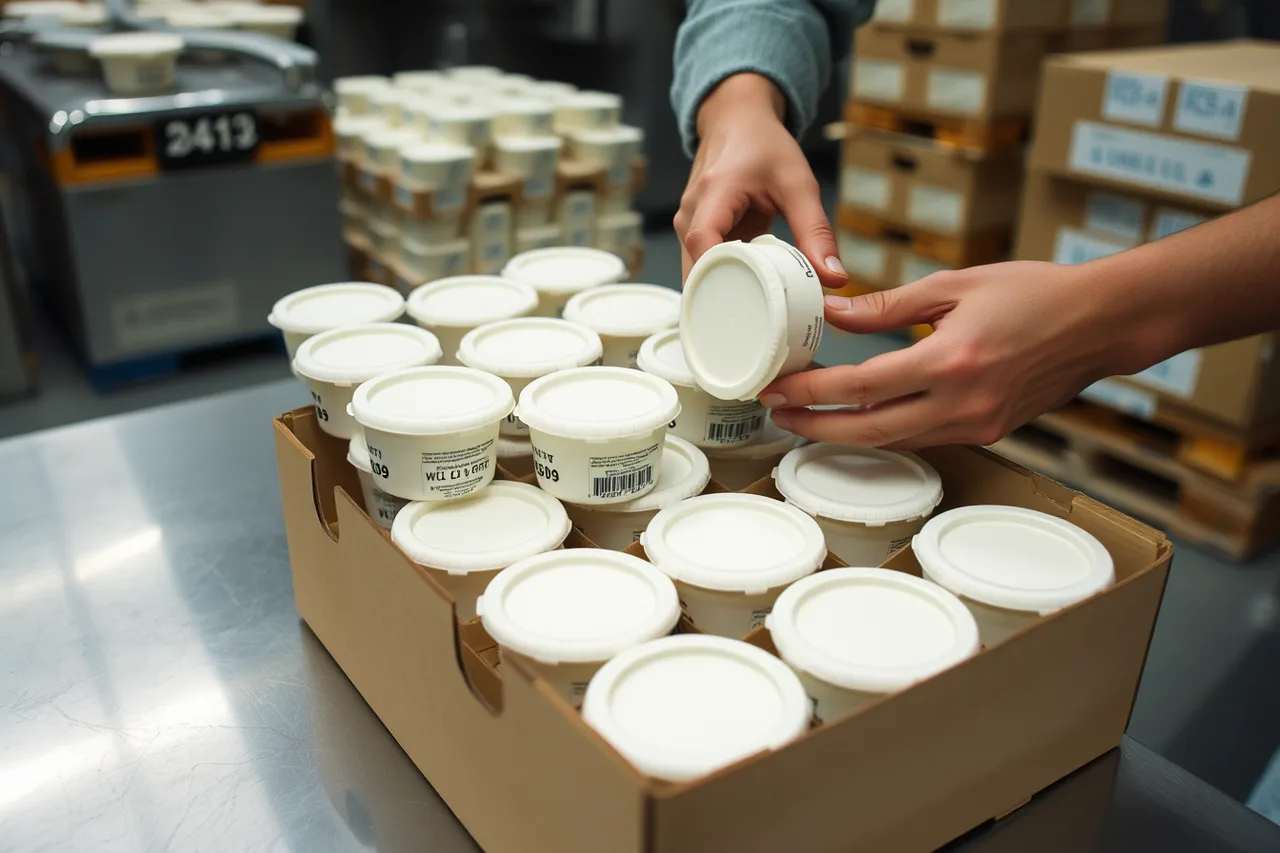
A case is the unit that matters. Small plants fill, cap, date, and palletize by hand, so a 12 unit case of cultured butter or a 6 unit case of quark is a real production decision.
A buyer who orders four cases a week is a good account. A buyer who orders one case every three weeks is a favor.
Getting in the door is usually a sample drop, a farmers market introduction, or a distributor sales sheet. The creamery that waits for a retailer to call will wait a long time. The ones that grow treat the first ten accounts as a route, not a customer list.
Once a creamery has more accounts than it can visit, it faces the same fork as any other maker: sell harder in the city it knows, or hand the city to someone else. That decision shapes cost, control, and shelf life more than any recipe change.
That is why distribution choices tend to decide whether a small dairy brand stays small or gets bought.
The three routes into a Milwaukee or Madison store
- Direct delivery. The creamery's own van runs a fixed weekly loop. Highest margin, highest fixed cost, tightest control of code dates.
- Wisconsin distributor. A refrigerated distributor buys at wholesale, warehouses, and delivers to stores on its own schedule — Wisconsin-based houses such as Reinhart Foodservice in La Crosse, or a grocery wholesaler such as SpartanNash that supplies independent stores. Lower margin, wider reach.
- Broadline house. A general foodservice or grocery distributor — Sysco, US Foods, Gordon Food Service, Performance Food Group — adds the creamery to a truck that already carries dry goods, paper, and frozen. Lowest margin, easiest entry.
Most creameries run two routes at once. Direct delivery holds the home market and the best accounts. A distributor covers the city where the creamery cannot afford a second van.
Cold-chain handling from creamery dock to grocery shelf
Cold-chain rules in dairy are not one rule. They are a set of temperature and handling requirements that follow the product from the pasteurizer to the customer's refrigerator, and each step has its own failure mode.
At the plant, the standard that governs Grade A milk is the Pasteurized Milk Ordinance (PMO), the federal model code that Wisconsin and most other states adopt. Under it, pasteurized milk is cooled to 45°F or less and held there, and the plant's own written food safety plan sets the handling practice on top of that. Cheese has more room: many varieties are held at warmer temperatures on purpose during aging.
On the dock, the risk is time, not temperature. A pallet staged in August heat while paperwork is finished can lose more shelf life than a full day in a cooler. Creameries that ship well stage loads inside and pull them out when the truck is backed in.
In the van, the risk is the door. Every stop opens the box. A driver who leaves the rear door open at a Milwaukee loading dock in July is running a warm room, not a refrigerated truck. Data loggers cost little and settle arguments with buyers.
At the store, the risk is the back room. A case that sits on a hallway floor for two hours before it reaches the dairy case has already lost days. Retail cold holding runs to 41°F or less under the FDA Food Code, and buyers who care about code dates ask where the delivery lands, not just when.
For a creamery that is also washing and reusing equipment, water and wastewater questions are part of the same operation. A plant that sends whey, wash water or clean-in-place rinse water to a municipal system or a stream is a discharger, and the EPA's water permitting and discharge topics are the ones small food processors run into.
The agency's small-entity compliance guides explain how a producer checks its own obligations before an inspector does — the same paper discipline that the dairy plant license and the pasteurizer records demand.
A cold-chain checklist for a new account
- Confirm the store's delivery window and who signs for the load.
- Set a maximum time from cooler pull to store cooler, and write it on the invoice.
- Put a data logger in the first three loads to a new account.
- Agree on the code date the store will accept on arrival.
- Name the person who gets called when a load arrives warm.
- Photograph the store's dairy case before the first delivery.
- Review the account after 90 days with actual shrink numbers.
Typical wholesale margins for a small dairy producer
Typical wholesale margins for a small dairy producer land between 25 and 35 percent gross on a case, before the creamery pays for its own delivery. Direct delivery to a Milwaukee or Madison store can push that to 40 percent or more, because the creamery keeps the distributor's share.
That margin has to cover a lot: milk, culture, packaging, labor, and refrigeration. Spoilage, samples, and the unpaid time spent selling come out of the same pool. A creamery that prices at 20 percent gross is funding the store's margin out of its own payroll.
The retailer's side is the mirror image. A store that buys a case at wholesale and sells it at a 40 to 50 percent markup is not gouging; it is covering rent, labor, shrink, and the shelf space that could hold something else.
Margins also differ by product. Fluid milk is close to a commodity and moves on volume. Cultured products, aged cheese, and butter with a story carry more. The same creamery can run a thin margin on one line and a healthy one on another, and the mix decides whether the route works.
Labor and energy costs move that math every year. The Bureau of Labor Statistics publishes industry-level figures that let a producer compare its own costs against the sector; its overview of statistics by industry covers food manufacturing and retail.
It also publishes an overview of statistics on business costs for the cost side of production.
A worked case
A creamery sells an 8 ounce cultured butter at $4.50 wholesale. The case holds 12 units, so the case price is $54.00. Ingredients, packaging, and direct labor run $36.00. Gross margin is $18.00, or 33 percent, before delivery.
If the creamery delivers that case itself and the route costs $6.00 per case in fuel, insurance, and driver time, the contribution drops to $12.00, or 22 percent. If a distributor takes the case instead and pays $45.00, the contribution is $9.00, or 20 percent, with no van on the road.
The numbers explain why small creameries fight for direct delivery in their home city and hand distant cities to a distributor. It also explains why a brand may earn more from one route than another rather than from a recipe change: the same butter carries a different cost to serve in Milwaukee than in a town an hour away.
Distributor versus direct delivery for a Wisconsin dairy supply chain
Direct delivery gives a creamery control. It sets the delivery day, the code date on arrival, the merchandising, and the relationship with the buyer. It also gives the creamery a truck payment, a driver, a route schedule, and a problem every time someone calls in sick.
A Wisconsin distributor gives reach. One account manager can place a creamery in dozens of independent Milwaukee retailers and independent Madison retailers without the creamery hiring anyone. The trade is margin and information: the creamery sees orders, not shelves.
Broadline distribution is the cheapest entry and the weakest position. The product rides with thousands of other items on a Sysco, US Foods, Gordon Food Service or Performance Food Group truck, gets a line on an order guide, and competes for attention with national brands that pay for it.
A practical split: direct delivery inside a 60 to 90 minute drive of the plant, distributor beyond it. That keeps the high margin accounts close and lets someone else absorb the long hauls.
Exclusivity is the clause to read twice. A distributor that asks for the whole state may sit on the brand. A distributor that asks for one metro and a defined account list is usually a better partner for a small plant.
Payment terms matter as much as margin. Net 30 from a distributor is normal, and it means the creamery finances the product for a month. A creamery with thin cash should weigh terms before it weighs reach.
Route comparison
Direct delivery
- Gross margin to creamery
- 35 to 45 percent
- Reach
- Home metro
- Control of code date
- Full
- Fixed cost
- Van, driver, insurance
- Buyer relationship
- Direct
- Best for
- Core accounts
Wisconsin distributor
- Gross margin to creamery
- 25 to 30 percent
- Reach
- Multiple metros
- Control of code date
- Shared
- Fixed cost
- None
- Buyer relationship
- Through sales rep
- Best for
- Expansion
Broadline house
- Gross margin to creamery
- 18 to 25 percent
- Reach
- Statewide and beyond
- Control of code date
- Minimal
- Fixed cost
- None
- Buyer relationship
- Through order guide
- Best for
- Trial and low volume
What a buyer checks before stocking a small creamery
A grocery buyer at an independent store is protecting shelf space and a reputation. The questions are predictable, and a creamery that arrives with answers sells faster.
First, licensing and plant number. The buyer wants the plant number and the license that goes with it. A jar or tub made outside an approved facility is a liability the store will not carry, and the fastest way to lose a buyer is an unapproved method in the production room.
Second, code dates and rotation. The buyer wants to know the shelf life on arrival, the sell by date, and what happens to product that does not move. A creamery that offers a standing rotation credit on dated product gets a second order.
Third, case pack and price. The buyer thinks in case cost, unit cost, and margin per facing. A creamery that cannot state its case cost per pound will not get past the first meeting.
Fourth, label compliance. The label needs the common name, net quantity, ingredient list, allergen statement, and the name and place of business of the manufacturer. A missing allergen statement stops a sale faster than a high price. A retailer stocking checklist worked through before the first order catches most of these problems while they are still cheap to fix.
Fifth, delivery reliability. The buyer has a dairy case to fill every week. A creamery that misses two deliveries in a month is a problem, regardless of quality.
Sixth, the story. Independent stores sell the maker as much as the product. A creamery that can explain its herd, its plant, and its town gives the store something to put on a shelf tag.
Documents to bring to a first buyer meeting
Documents to bring
- Plant number and current license.
- Product list with case pack, case cost, and suggested retail.
- Shelf life and code date policy.
- Certificate of insurance.
- Delivery schedule and order cutoff.
- Label proofs for every item.
- One sample of each item, cold.
How state inspection and FDA oversight divide the work
The Wisconsin Department of Agriculture, Trade and Consumer Protection (DATCP) is the day-to-day regulator for most Wisconsin dairy plants. Wisconsin dairy plant licensing and oversight are addressed in Wis. Stat. § 97.20 and Wis. Admin. Code ch. ATCP 65. State inspectors look at the facility, the process records, the sanitation, the pasteurizer charts, and the label. They issue the license and they can stop production.
The FDA sets the standards that apply across states. Standards of identity for cheese, cultured milk, and butter, labeling requirements, and the rules on ingredients all come from the federal side, and the Pasteurized Milk Ordinance — the Grade A code state inspectors work from — is issued here as well. A plant can pass a state inspection and still have a label that violates federal rules.
In practice, the two layers overlap. State inspectors enforce federal requirements as part of their own programs, which is why most small plants deal with one inspector and one set of paperwork. The federal layer matters most when a product crosses state lines or makes a claim.
Changes to federal food safety rules arrive through the Federal Register, and the Federal Register :: Health & Public Welfare topic page is where a producer can follow proposed and final rules that affect food. Reading it is cheaper than discovering a new requirement during an inspection.
Grade standards, marketing orders, and dairy promotion programs sit with USDA rather than FDA. A creamery that wants to use a grade mark has to meet the federal grade standard and the state's own requirements for that mark.
Who handles what
State department of agriculture
- Plant license and inspection
- Yes
- Pasteurizer records and process control
- Yes
- Standards of identity for cheese and butter
- Enforced locally
- Label content and claims
- Reviewed at inspection
- Interstate shipment
- Plant must be licensed
- Grade marks
- State program rules
FDA
- Plant license and inspection
- No
- Pasteurizer records and process control
- Standards apply
- Standards of identity for cheese and butter
- Set federally
- Label content and claims
- Set federally
- Interstate shipment
- Federal rules apply
- Grade marks
- USDA grade standards
For a small creamery, the practical rule is simple: keep the plant clean, keep the records, keep the label accurate, and keep the license current. For a buyer, the practical rule is to verify the plant number and the label before the first order, then watch the code dates on every delivery.
The Wisconsin dairy supply chain is not complicated because of the rules. It is complicated because the margin is thin, the product is perishable, and the distance between a creamery and a grocery shelf is measured in hours, not miles.
The producers who last are the ones who know their cost per case, their delivery window, and the name of their inspector.