Maintenance
Specialty food mistakes that cost the most: overbuying and bad preserving
Overbuying and untested preservation are the two specialty pantry mistakes that cost the most, and both are decided early: at the register or before the first jar is filled.
What to take away
- The largest money loss in a specialty pantry is buying more than you finish, and it hides as enthusiasm.
- The largest risk is preserving food by a method nobody tested. Utah State extension warns that any major canning mistake on its list may cause botulism.
- Both costs are set early, in the shop or at the stove, not months later.
- Reading a label means reading the small print, not the front panel.
- Nothing here costs more money. Most of it means buying less at a time.
Buying for the pantry you wish you had
A specialty shelf fills with jars bought for a dish nobody cooked. The money is already spent, and the jar is not getting better.
A typical specialty preserve or condiment jar costs about 8 to 15 dollars at retail. Five unopened jars is 40 to 75 dollars spent once and gone.
Regional pantry goods make this worse. A small producer of Appalachian apple butter, New Mexico chile sauce or Maine blueberry preserves may sell only one gift-size jar, so the jar arrives larger than a household needs. For a shop or a household, the question is whether a regional specialty is worth a full jar before you have tasted it.
The FDA's guidance on cutting food waste puts buying less ahead of storage, which is the order this article follows.
The household version is simpler. Buy one jar, finish it, then decide what comes next. A yearly count makes the pattern visible, and photographing the pantry once a year measures your buying rather than the products.
The count should record three numbers: unopened jars past their best-by date, opened jars you did not finish, and items you rebought while an older one sat unopened.
Improvising preservation
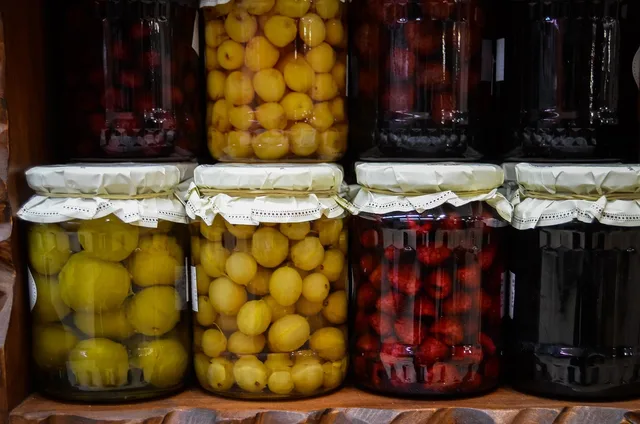
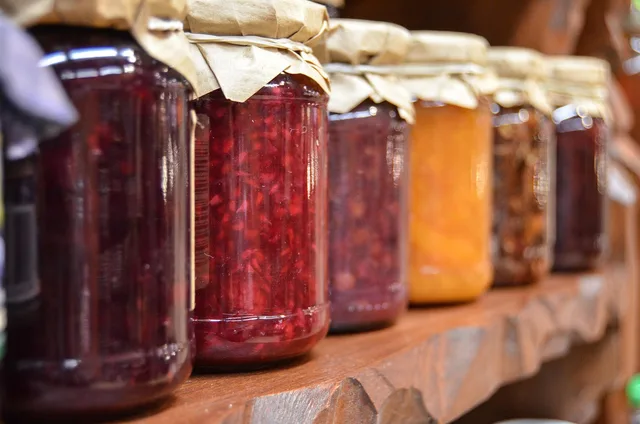
The second expensive mistake is making preserves from a recipe nobody tested. Utah State's guidance on avoiding common canning mistakes warns that any major mistake it lists may cause botulism.
Tested recipe vs improvised jar
Tested recipe
- Processing time
- Calculated and verified
- Density
- Set by recipe
- Acidity
- Set by recipe
- Botulism risk
- Controlled
Improvised recipe
- Processing time
- Unknown
- Density
- Changed by extra starch
- Acidity
- Diluted by extra vegetables
- Botulism risk
- Possible
Three mistakes stand out. Writing your own recipe means no tested processing time exists for it. Extra starch, flour or thickener slows heat penetration to the center of the jar. Extra onions, peppers or other vegetables in a salsa dilute the acidity the recipe was built around.
Each of those looks like cooking. None of them is, once a jar is sealed. A sealed jar is a small anaerobic environment, and the processing time was calculated for one density, one acidity and one fill level. Change any of the three and the calculation no longer applies, whatever the jar looks like on the shelf.
Use a tested recipe from the USDA Complete Guide to Home Canning or the Ball Blue Book. A typical batch fills six to nine pint jars, so one bad recipe can take roughly 30 to 60 dollars of produce, jars and fuel with it. Shops refuse such jars too; see the canning methods a specialty food shop should not accept.
Here is how the two compare, as an illustration. A household that overbuys five jars three times a year spends 120 to 225 dollars on jars that go unfinished. One failed canning batch costs 30 to 60 dollars, and it happens once. Overbuying is the larger money loss because it repeats; improvised canning is the larger safety risk.
The mistakes ranked by what they cost
| Mistake | Cost |
|---|---|
| Improvised preservation | Potentially health, and the whole batch |
| Buying more than you finish | Steady, invisible, and the largest in money |
| Storing in a warm cupboard | Flavor first, then the product |
| Chasing labels instead of reading them | Money, and a false sense of having checked |
| Confusing preference with proof | Time, repeatedly |
The label row is the cheapest to fix. Three lines decide it: the allergen statement, the best-by date and the Contains line. A missing Contains line is a gap rather than a pass. Glancing at the front panel tells you nothing about any of them.
Store jars between 50 and 70 F, out of direct light and away from the stove. Warmth and light take color and flavor first, then shelf life. Home-canned goods hold best quality for about a year, and an opened jar of preserves keeps a few weeks in the fridge.
The habits that remove most of it
- Buy the smallest size of anything new.
- Write the opening date on the lid.
- Cook the dish you bought it for within two weeks, or admit you will not.
- For anything preserved at home, use a tested recipe and follow it exactly.
- Keep a rough count of what you throw away, with the item and the date. It is the only honest measure of the problem.
Related reading
The serving side is covered in which serving habits waste an opened jar, and the tasting side in six tasting-flight mistakes. The storage half is set out in why pantry flavor fades, which explains how heat and light change a jar before you open it. For jars shipped to you, see dates and storage problems in a shelf-stable shipment.
When a jar crosses a state or national line
Cottage food laws are set by each state, and a jar that is legal at a farmers market at home may not be legal to ship.
Confirm the rules with your state agriculture department before you sell or ship across a border. A US jam entering Canada falls under Canadian Food Inspection Agency labeling requirements, which are separate from FDA rules.
Nothing here is legal advice; a food law attorney handles a specific product.
What this article does not cover
Whether a particular food is safe to eat, how to can or preserve it, and how to diagnose spoilage are questions for the USDA, your state extension service and a licensed food safety professional. Whether a product suits a given person, including any allergen question, goes to a physician or registered dietitian and to the manufacturer's own allergen statement.
Common questions
Is an expensive jar more likely to be wasted?
In practice yes, because people save it for an occasion that does not arrive. Open it sooner.
Can I adapt a tested canning recipe slightly?
Not in ways that change acidity, density or fill. Seasoning within the recipe's own allowance is different from adding vegetables.
How much is too much to have open at once?
If you cannot name the next dish for a jar, you have too many open.
What about food bought as a gift?
Gift purchases are where overbuying concentrates, because the buyer is choosing for a pantry they cannot see. Buy something the recipient will finish rather than something impressive, and prefer one good item to a set of five.
In this guide
- Canning methods a specialty food shop should not accept from preserve producersShops buying small producer's preserves will find the canning methods that disqualify a producer, plain questions to ask, and how to read the answers.
- Why opened specialty food jars get wasted, and how to stop itMost specialty food is wasted after it is opened, through jar size, serving habits, time out of the refrigerator and the habit of saving something good for an occasion that never comes.
- Why gluten-free claims on a specialty food label carry a real numberGluten-free is one of the few marketing words on a package with a number behind it, and knowing that number changes how you read every claim next to it.
- A shelf-stable specialty food shipment arrives with dates and storage problems, cheap to fix earlyA shipment of shelf-stable food arrives with dates you will misread and storage you have not planned, and both problems are cheaper to fix on arrival day.
- 6 Specialty Food Tasting Mistakes, and How to Avoid Them in a Regional FlightSix mistakes that spoil a tasting flight of regional specialty foods, and how to avoid each: vague questions, the wrong test, results read as magnitudes, room bias, uneven samples and one-jar verdicts.