Rules
How US cottage food laws decide which pantry jars can cross state lines
State cottage food laws decide which home kitchen jars can cross state lines, from Texas to California, and what a pantry scout may sample, resell or ship.
What to take away
- A cottage food permit is a state license for one home kitchen. It covers sales inside that state and nothing else.
- Across a state line the jar becomes an FDA-regulated foodfacility registration, a FSMA preventive controls plan and full labelling.
- Texas Health and Safety Code Chapter 437 and California Health and Safety Code Sections 114365 through 114365.5 both keep cottage sales inside their own state.
- Retail resale is legal in some states, such as California Class B, but only within that state.
- Caps vary far more than the usual $50,000. Wyoming's Food Freedom Act sets no cap for direct sales.
Why a cottage food permit stops at the state line
A cottage food permit is a state license for a home kitchen that makes low-risk foods. Each state writes its own rules, sets its own cap and lists its own allowed foods. A permit that lets a baker sell jam in Austin carries no force in Santa Fe.
States issue these permits under their public health power, which ends at the border. A jar that crosses a state line enters interstate commerce and falls under federal law instead. Federal rules then require FDA food facility registration, a safety plan built on FSMA preventive controls, and a filed process for low-acid canned goods.
Buyers moving a market stall product onto a shelf meet the same wall, and regional foods sold at a farmers market may need new licensing for a store shelf.
What Texas Health and Safety Code Chapter 437 allows
Chapter 437 of the Texas Health and Safety Code is the state cottage food law. It allows direct sales of approved foods from a home kitchen without a state food license. Baked goods, jams, jellies, dried fruit, pickles and honey qualify.
Meat, poultry, dairy and refrigerated items do not qualify. Sales must run direct to the consumer at a home, a farmers market or a community event. Distributors, restaurants and grocery stores are barred. The label must state that the food was made in a home kitchen not inspected by the Texas Department of State Health Services.
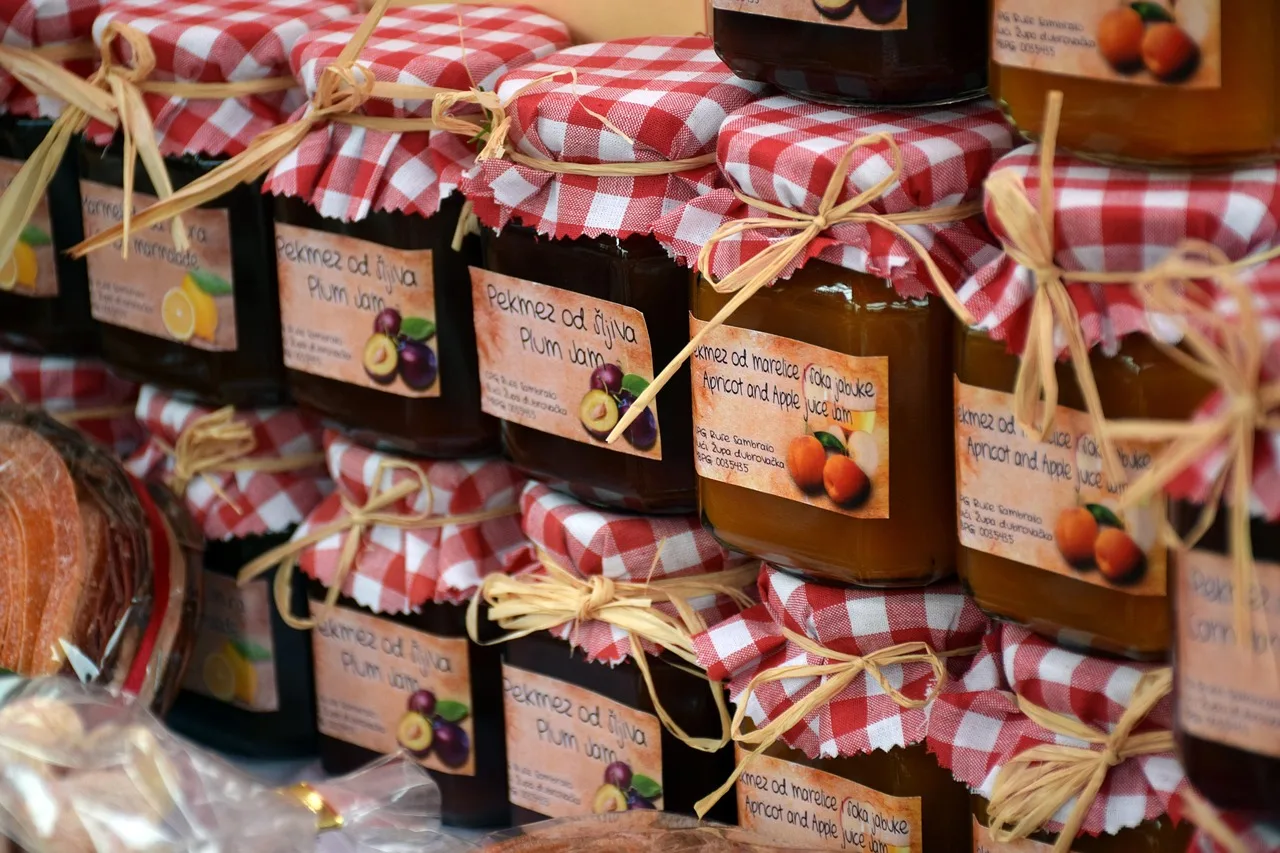
That label line is the tell. A jar carrying it cannot be resold across a state line.
What the California Homemade Food Act changes for retailers
California Health and Safety Code Sections 114365 through 114365.5 create two classes. Class A sells direct to consumers. Class B may also sell through a permitted retailer or food facility inside California.
Class B is the one a scout can use, because a permitted shop may buy and resell. Both classes stay inside the state, and interstate shipment needs a processed food registration or a cannery license.
Retailers should audit the license before the first order. The same licensing checks that specialty food buyers run apply to a cottage jar.
How far cottage food sales caps actually range
The $50,000 figure is a midpoint, not a national rule. Wyoming's Food Freedom Act sets no cap for direct sales. Other states sit well below $50,000, and caps change most years. Treat the table as illustrative and confirm the figure with the issuing state.
| State | Annual cap (illustrative) | Retail resale inside the state | Law or program |
|---|---|---|---|
| Texas | $50,000 | No | Health and Safety Code Ch. 437 |
| California Class A | $50,000 | No | Health and Safety Code 114365 |
| California Class B | $75,000 | Yes, via permitted facility | Health and Safety Code 114365 |
| New York | $50,000 | Limited home processor rules | Home processor program |
| Wisconsin | $50,000 | No | Cottage food program |
| Wyoming | No cap | Direct sales only | Food Freedom Act |
| New Mexico | $50,000 | No | Cottage food program |
State Cottage Food Rules Compared
Texas
- Annual sales cap
- $50,000
- Direct sales only?
- Yes
- Label statement
- Home kitchen not inspected
California
- Annual sales cap
- $50k A / $75k B
- Direct sales only?
- Class B indirect
- Label statement
- Made in a home kitchen
New York
- Annual sales cap
- $50,000
- Direct sales only?
- Yes, some rules
- Label statement
- Home processed statement
Allowed foods differ as much as caps. Pickles, salsa and other acidified items are permitted in some states and banned in others.
What a food processing license requires
The license that covers interstate sales is a food processing license.
- Register the facility with FDA. Registration is free and renews in each even-numbered year between October 1 and December 31.
- Move into a commercial kitchen with local health approval. Rent and permit costs vary by market.
- Train a preventive controls qualified individual. Courses typically run from a few hundred dollars to just over a thousand.
- For acidified or low-acid canned products, complete Better Process Control School and file the scheduled process with FDA.
Producers can follow the federal business registration steps at USA.gov, then confirm the state license.
Confirm in writing before any order:
- Permit number and issuing state
- The home kitchen statement in the exact state wording
- The product on the state's allowed foods list
- A written answer on the shipping destination
Cottage Food Purchase Checklist
- Producer's name and address on label
- State cottage food permit number recorded
- Product on the state's allowed food list
- Sales channel matches direct or indirect rules
- Destination state verified for permit validity
- Permit, label, and sales receipt copied
Labelling an in-state jar versus an interstate jar
Before ordering, check the public failure lists from state inspectors for a producer's record.
In-state cottage labels usually carry the producer's name and address, product name, ingredients, net weight and the home kitchen statement. Most states do not require a Nutrition Facts panel for in-state sales.
Crossing a state line ends that exemption. Five FDA elements apply: statement of identity, net quantity of contents, ingredient list, Nutrition Facts panel, and name and place of business.
FDA standards of identity decide what may be sold as jam, and USDA AMS grades and standards for fruits set a quality benchmark. Federal food safety changes reach state programs quickly, and the Federal Register health and public welfare topic page tracks the agencies writing them.
Example: a Texas jam jar ordered for a New York shelf
A New York buyer orders twelve cases of Texas jam from a producer holding a cottage permit only. The order fails twice. Texas bars resale through a retailer, and interstate shipment needs FDA registration.
The fix takes a season. The producer moves to a commercial kitchen, registers with FDA, files a safety plan and relabels. The buyer verifies the state license and the FDA registration before paying.
Ask two questions before money moves: which state issued the permit, and does the producer hold a current FDA registration? A no to the second question ends the order.
Buyers tracking how labelling changes shift shelf space should read 4 label rules reshaping pantry brand discovery before terms are set.