Features
State food specialties status ranges from symbolic to strictly regulated
State food specialties range from a symbolic legislative nod to a labeling law with teeth, and knowing which kind you are holding changes what the name is worth.
What to take away
- State food specialties come in two very different kinds, and only one of them constrains a label.
- Vermont's maple law reserves the phrase Vermont maple for products actually produced in Vermont.
- Georgia law does the same for Vidalia onions, which may carry that name only if they were grown in the state's defined Vidalia growing area.
- Georgia's state fruit, the peach, is the symbolic kinda legislative declaration with nothing enforceable behind it.
- Other specialties are defined by seed, place and habit rather than by statute, which is a weaker claim and often a more interesting one.
- We are not publishing a numbered list of specialties to try, because a count would be arbitrary and the ranking would be ours rather than earned.
Two kinds of designation
A legislature can declare a state dish, fruit or beverage. Georgia's peach is the standard example: the legislature named it the state fruit, and that declaration is where the rules stop. It speaks to identity, not to what may be printed on a jar. Anyone can sell a product tied to it, and no one must meet a standard.
Where no standard applies, the nearest substitute is a federal grade standard such as U.S. Grade A, published by the USDA's Agricultural Marketing Service, or a certification's published conditions. Grades like that measure quality — color, size, defects — not where the food came from.
The other kind is a statute that regulates the name. It defines terms, sets quality requirements and restricts who may use the words. Both get called a state specialty in ordinary conversation. Only the second one is enforceable.
Regulated names: Vermont maple and Vidalia onions
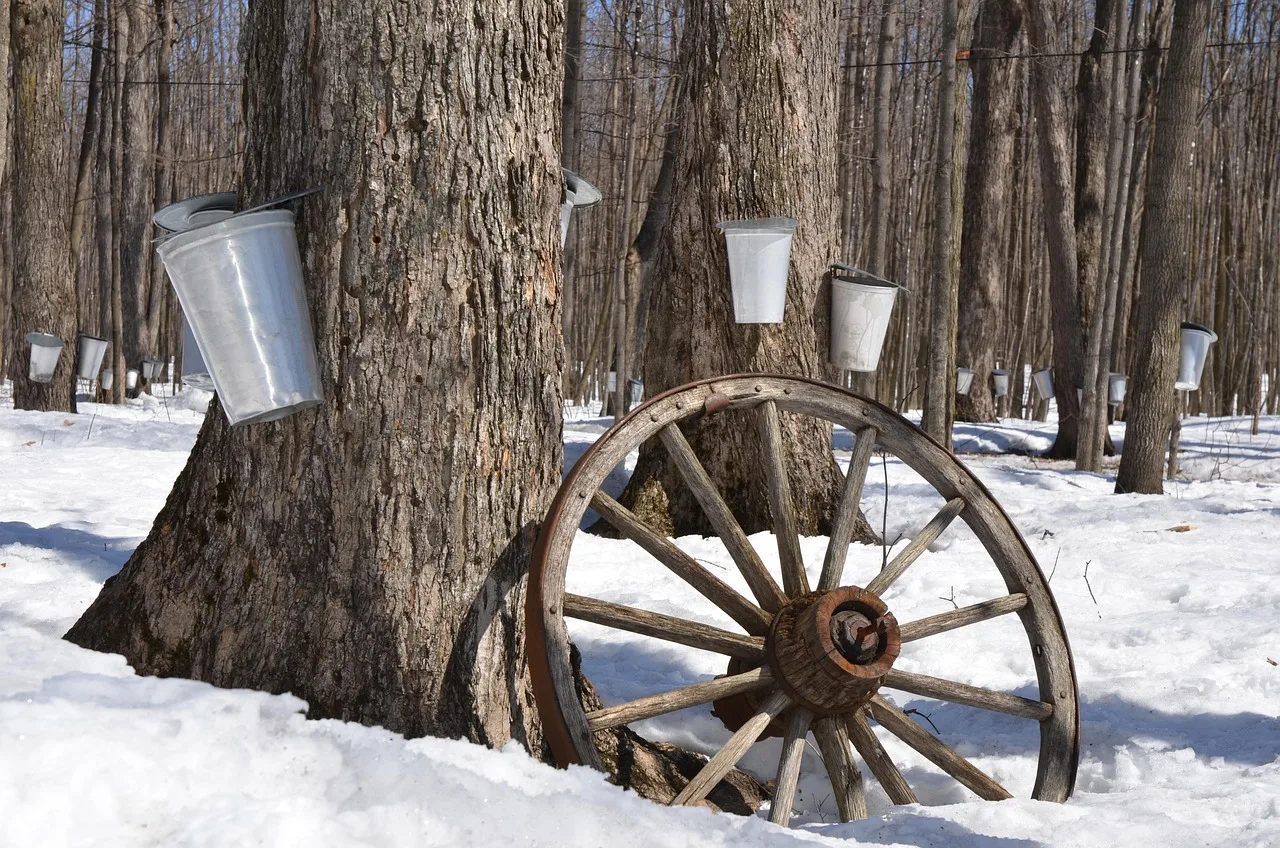
Vermont's maple chapter is the strictest example of a name with rules. Our guide to tasting and comparing state food specialties at home covers the table side of the same subject.
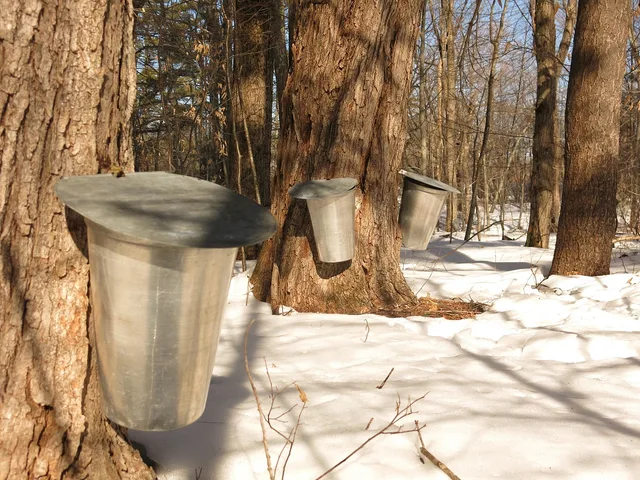
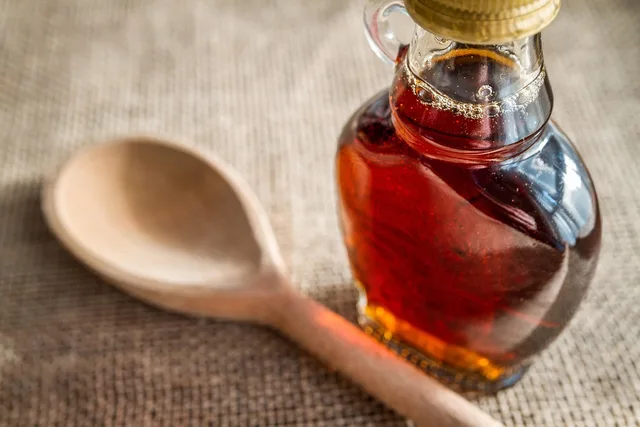
Under Title 6, Chapter 32 of the Vermont Statutes Annotated — the citation is 6 V.S.A. ch. 32 — any labeling saying Vermont pure maple syrup, Vermont maple syrup, or otherwise implying syrup was produced in Vermont may be used exclusively on 100 percent maple syrup.
It must be produced entirely within the state in compliance with that chapter and its rules.
The statute also handles imitation. Terms such as artificial maple flavor may be used. The words artificial and flavor and other modifiers must appear in equal prominence to the word maple, on the label and in advertising.
A container has to be plainly marked with the packer's name, address and zip code, the true name of the product, and the volume or net weight.
That is a state specialty in the strong sense. The place name is a controlled term.
Vidalia onions
Georgia's law works the same way with a shorter reach. An onion may be sold as a Vidalia only if it was grown in the defined Vidalia growing area in Georgia, and the Georgia Department of Agriculture is the agency that enforces the name. An onion grown outside that area can be sweet, but it cannot be called a Vidalia.
The unregulated case: a chile with a pedigree
New Mexico chile is a specialty of a different sort. Its identity comes from cultivars and farming.
The standardized New Mexico type traces to New Mexico No. 9, released in 1913 by the then New Mexico College of Agriculture and Mechanic Arts, according to New Mexico State's circular on the landrace chiles of northern New Mexico.
Alongside standardized cultivars are landraces, kept by growers in particular valleys and named for them. No statute reserves those names as Vermont reserves maple.
The claim rests on seed, place and continuity. Every heritage claim works the same way: a named variety can be checked, and a vague pedigree cannot. Four questions do most of the work.
- What is the variety called, and does that name turn up in a university extension publication or a seed catalog?
- Which farm grew it, and in which county or valley?
- Does the grower save seed, and how long has the line been grown in that place?
- Does the name appear in state law as a controlled term? If so, it has moved to the regulated side.
How to tell which one you are holding
| Signal | What it suggests |
|---|---|
| A state name inside the product's legal name | A regulated term, worth checking |
| A state name only in the brand or the story | Marketing, and fine as marketing |
| A named cultivar, landrace or variety | A checkable claim about seed |
| An official state dish or symbol reference | Identity, not a standard |
Why there is no numbered list here
A list of specialties to try in a given year is a ranking. We have not eaten our way around the country to earn one.
What we can do is show which claims are enforceable and which are not. That is the same test we apply in our guide to what labels can tell you and in the buying method laid out in our piece on what to look for when buying state food specialties.
Common questions
Does an official state dish mean anything for shoppers?
Can a producer outside a state use its name?
Is a landrace better than a modern cultivar?
Where do I check a state's rules?
In this guide
- State Food Specialties Tasting: A Maple Syrup MethodState food specialties tasting starts with maple syrup: see why density matters, how to isolate one variable, and how to record a fair at-home comparison.
- Public failure lists from state inspectors make the best specialty food buying checklistState inspectors publish what they actually find wrong with specialty products on retail shelves, and their list of failures is the best buying checklist available.
- Why State Food Specialties Makers Depend on a Narrow WindowState food specialties makers depend on a narrow harvest window. Sorghum, Vidalia onions, maple syrup and Hatch chiles trace scarcity to a short field season.