Industry
Part of State food specialties status ranges from symbolic to strictly regulated
Why State Food Specialties Makers Depend on a Narrow Window
State food specialties makers depend on a narrow harvest window. Sorghum, Vidalia onions, maple syrup and Hatch chiles trace scarcity to a short field season.
What to take away
- Most state specialties are agricultural before they are culinary, and the crop sets the terms.
- Sweet sorghum syrup is a good worked examplelabor-heavy, weather-exposed, small acreage.
- Extension cost studies exist for many of these crops and are far more honest than any brand story.
- Year to year variation is not a quality failure. It is what a small crop does.
Start with the crop, not the jar
A specialty food usually exists because a crop grows well somewhere and someone found a way to keep it. Understanding the crop explains the product's price, its season and why two jars from the same producer differ.
Sweet sorghum syrup is a useful case: it has been studied and costed. North Carolina State's publication on sweet sorghum production describes the crop as well suited to the southeastern climate.
It is a high-yielding source of fermentable sugars that requires relatively low nutrient inputs, and its per-acre budget covers machinery, general overhead and total costs.
A budget in a public document is unusual and useful. It tells you a producer's economics are not a secret, even when their pricing feels like one.
The same window shapes other state specialties
Vidalia onions are grown in roughly twenty Georgia counties under a USDA Agricultural Marketing Service marketing order that restricts the name to that region. The harvest runs from late April through June, and the order publishes its season dates each year.
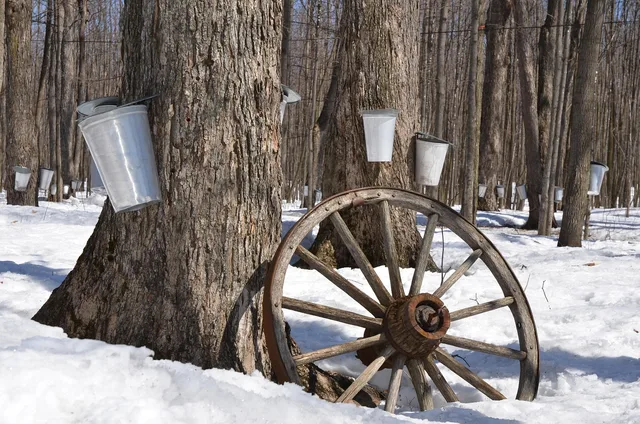
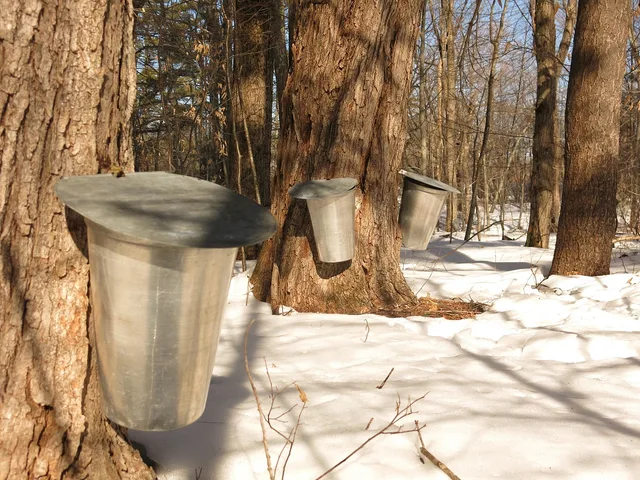
Vermont maple syrup depends on a sap season that lasts six to eight weeks, typically March through mid-April. Once the buds break and sugar content drops, the flow turns bitter and the season is over.
Hatch chiles, grown in New Mexico's Hatch Valley, are harvested from August into October. The narrow window and hand-picking labor mean a producer's annual output is set by a few weeks of weather.
Each of these crops shares the pattern sweet sorghum shows: a short harvest window, heavy labor, and a product whose availability is dictated by the field calendar rather than by shelf strategy.
Small crops fail in ordinary ways
An on-farm trial report from the same extension service, kept online for historical reference, describes work in Yancey, Madison and Buncombe counties to identify sorghum varieties suited to western North Carolina and resistant to disease and lodging. The report notes that while some growers reported success, results were limited by severe weather in several locations.
That is the real texture of specialty production. Not a story about heritage, but a variety trial where the weather ruined several sites.
Reports like that also explain why a small producer's range changes from year to year. A variety that lodges in a wet season gets dropped. A flooded field is not replanted, and the jar on the shelf is the surviving end of a chain of decisions that had little to do with taste.
Further upstream the same winnowing happens in the public seed collections and variety trials behind the shelf.
What the production shape does to the product
| Production trait | What a buyer notices |
|---|---|
| Short harvest window | Sold out by spring, back in autumn |
| Labor-intensive processing | High price relative to the ingredient |
| Small acreage | Batch to batch variation |
| Weather exposure | A thin year, then a good one |
For a buyer that table is really a calendar. Knowing a crop's window tells you what a pack date means, and a jar packed well outside it is worth one question.
Production traits and buyer signals
Production trait
- Short harvest window
- Sold out by spring
- Labor-intensive processing
- High price vs ingredient
- Small acreage
- Batch to batch variation
- Weather exposure
- Thin year, then good
What a buyer notices
- Short harvest window
- Back in autumn
- Labor-intensive processing
- Small acreage
- Weather exposure
Questions that get real answers
- What acreage or how many trees, hives or animals stand behind this batch?
- Who grew the raw material, and was any of it bought in?
- What changed between last year's batch and this one?
- How long does the process take from harvest to jar?
Producers who do the work usually enjoy these questions. The answers also tell you whether you are buying from a maker or from a brand that commissions a maker, a distinction that matters when the harvest window is only a few weeks long. See planning brand discovery for how to read a label against the crop calendar.
Why the window explains the price
If you know a crop has a two-week harvest window and a labor-heavy boil, you stop reading a price as arrogance and start reading it as arithmetic. The same logic applies to a six-week maple season or a ten-week Vidalia window. You also stop treating variation as a defect, because a short field season makes every year different. The measurable side of quality is covered in how to taste and compare state food specialties at home.