Industry
Which distribution choices actually reveal an independent food brand's future
Independent food brands companies: their channel — market stall, specialty shelf or grocery aisle — reveals more about the next two years than a founder story.
Independent food brands companies — the regional American pantry makers this site follows — rarely announce which way they are heading. Their selling channels do. A peach preserve put up in Georgia, a stone-ground grits mill in South Carolina, a maple syrup producer in Vermont: the next two years are legible in where the jars sell, who pays for them, and how long the money takes to arrive.
What to take away
- Where a brand sells predicts its next two years better than anything printed on its label.
- A first move into wholesale cuts unit revenue and stretches payment terms at the same time.
- Case-pack sizes, stockist lists and pack counts change months before any announcement does.
- Slotting fees and volume discounts decide which brands hold a shelf; both are negotiated per store or chain and not published anywhere.
- The reads below work the same for a Georgia peach preserve, a Vermont maple syrup or a South Carolina grits mill.
- None of this measures whether the food tastes good. That is a separate test at your table.
Direct sales and wholesale pay on different clocks
A brand at a farmers market sells 40 jars to 40 people and gets paid the same day. A brand on a grocery shelf sells 96 jars to one buyer and waits 30 days for the money.
Market vs Chain Brand
Farmers market brand
- Buyer
- A few hundred people
- Price
- Retail price
- Terms
- Cash at stall
- Renewal
- Weekly attendance
Chain-store brand
- Buyer
- One wholesale buyer
- Price
- Wholesale price
- Terms
- Agreed contract terms
- Renewal
- Buyer decides next season
University of Maryland Extension lays out the fork in choosing distribution methods. Its list is short: direct farm markets, farmers markets, internet sales, business to business, specialty stores, niche markets.
Each channel carries its own entry cost and its own clock. Stall fees and staff time sit on the direct side. Slotting fees, volume discounts and buyer terms sit on the wholesale side.
For each channel the same three questions decide what comes next: who sets the price, when does the money arrive, and how large a run does the channel demand. Read that way, the extension's short list predicts a different future for each choice:
- Direct farm markets and farmers marketscash the same day, a price the maker sets, and a volume ceiling fixed by foot traffic and stall time.
- Internet salesthe maker's price again, minus shipping and packing, with no ceiling and no walk-up crowd.
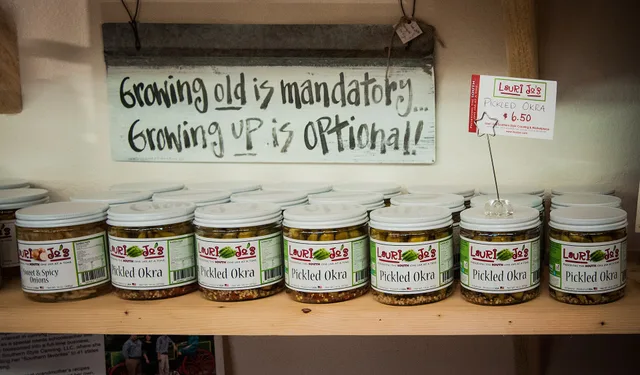
- Specialty stores and niche marketsa curated shelf, runs of a few cases, and a buyer who sets terms store by store.
- Grocery and natural food store accounts, from a regional chain to a national one such as Kroger or Whole Foods Market: volume, a corporate or distributor buyer, and longer payment terms.
- Business to business and food servicethe biggest runs and the thinnest margin per unit, with a chef or a purchasing office as the customer.
A maker sets the retail price. A buyer sets the wholesale price from a margin target, so the same jar earns less per unit once it leaves a warehouse.
The wholesale step changes four things at once
Maryland extension defines wholesale as selling in quantity to a buyer who resells the goods, and notes most American agricultural products move through those channels. Small producers sell wholesale to grocery stores, natural food stores, food service and food buying cooperatives, or through a middle man — in practice a national natural foods distributor such as UNFI or KeHE, or a regional house that covers a few states.
Four things move together: unit revenue falls, volume rises, payment terms lengthen, and a production schedule becomes a delivery schedule. Pack sizes are the first visible trace.
Buyers often ask for graded or standardized product. USDA Agricultural Marketing Service publishes grades and standards for fruits, covering processed items too, and a spec sheet usually points back to it.
The legal step can arrive before the economic one, because a cottage food permission usually does not cover a sale to a shop. Cottage food rules are state law rather than federal, and they run through a state department of agriculture or a state health department; most of them cap annual sales and confine the food to direct sales inside the state. The rules shop and bar buyers work under show how that gap closes.
Signals that show up before the announcement
| Signal | What it usually means |
|---|---|
| New case pack of 12 or 24 on the shop page | Wholesale preparation, or wholesale already running |
| Line narrows to three best sellers | Rationalizing for a co-packer |
| Appears in a chain, leaves the market | A channel switch, not automatically growth |
| Adds a certification mark | New facility, or a buyer demanded it |
| Stops shipping direct | A distribution deal, often exclusive |
Three checks take about fifteen minutes:
- Open the shop page and write down every pack count.
- Find the stockist list and note which channel dominates.
- Compare the current pages with an archived version from a year ago.
A brand that moves from 6-jar to 12-jar cases usually does it for a distributor, not for home buyers.
A new certification mark reads better as an expense than as a virtue. The recurring costs behind one are set out in what extra money buys in brand discovery.
Example: costing one case of jam
A 9-ounce jar sells for $12 at retail, and ingredients plus the jar cost $3.50. A market day costs $45 in stall fees and clears 40 jars. That works out to 40 times $8.50, or $340, less $45, so $295.
Wholesale buyers typically pay 50 to 60 percent of retail, so call the wholesale price $6.60. Margin per jar falls to $3.10.
Matching $295 needs about 96 jars, which is eight 12-jar cases, and the margin is $297.60, within a few dollars of the market day. The catch is cash timing.
A wholesale order also brings a shelf-life guarantee and a delivery window. Delivery windows are set by the buyer's warehouse, not by the maker, and both terms constrain the production week.
The maker still funds $336 in ingredients and jars before the 30-day clock pays out. That gap sits inside a wider budget, and where a specialty food budget goes traces it line by line.
What a channel signal cannot tell you
Distribution data describes a business, not a jar. A brand can be growing and still taste worse than it did two years ago. A shrinking brand can still make the best preserve on the shelf.
Quality is a separate test, run at your own table with two unmarked samples.
Common questions
Is entering a supermarket a good sign?
What is a slotting fee?
Does leaving a farmers market mean trouble?
How do I judge quality instead of business?
In this guide
- Independent Food Brands: Reading the Label ClaimIndependent food brands: FDA has no ownership standard for “independent.” See which food and origin rules apply, and how USPTO records help check a brand name.
- Pantry jar sales channels: what they cannot proveFor independent brands USA shoppers, sales channels explain who sells a jar and who moves it — not where its ingredients grew or whether a local claim holds.
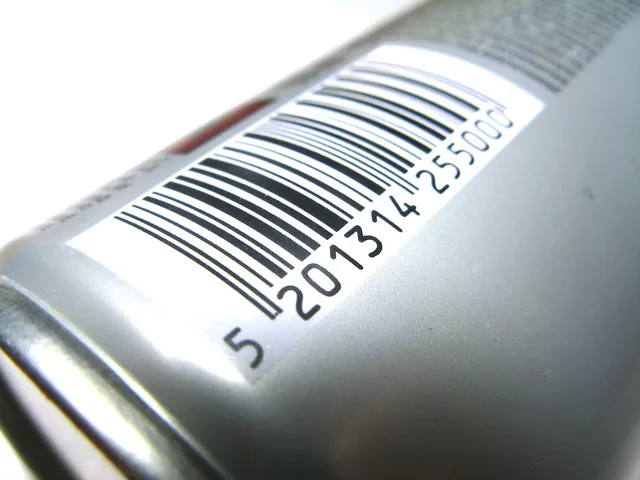
- Independent food brands deserve a barcode and processing review before the first orderRetailer checklist for stocking independent food brands: before a first order, confirm the barcode, the processing rules that apply to that specific food.
- Independent Food Brands Trends: 10 to KnowTen named pantry brands, from Bob's Red Mill to Bueno Foods, plus the independent food brands trends shaping what a label really tells you.
- 6 ways to serve independent food brands without wasting a single jarFive ways to serve: a strong jar goes further than people expect, and the difference between a good plate and a wasted one is usually the size of the first serving.