Costs
Part of How to Research Regional Pantry Foods by Category
What a higher price pays for in small-batch pantry goods
Pantry brand discovery on price: what a higher price pays for in small-batch goods, from batch size and packaging to New York's license fees and certification.
Pantry brand discovery sooner or later runs into price: two jars of the same preserve, one costing far more than the other. Most of that gap is not mystery quality but cost lines a small producer has to recover, several of which are published.
What to take away
- Price in this category is mostly volume, packaging and shipping, not secret quality.
- A producer setting a price is choosing between two methods, and the choice shows up on the shelf.
- Certification and licensing are real recurring costs that a small producer has to recover somewhere.
- The cheapest way to raise the value of a purchase is to buy fewer, larger units less often.
Two ways a price gets set
Penn State's guidance draws a distinction worth carrying around. The price is the amount you want per unit; pricing is the process of working out what that number should be. The two common methods are competition-based pricing, which starts from what similar products charge, and cost-based pricing, which starts from what the product costs to make.
You can often tell which one a producer used. A jar priced at a suspiciously round number in line with the shelf around it is competing. A jar priced at an odd number that does not match its neighbors is usually counting costs.
What the extra dollars are actually buying
- Ingredient cost, which is real but rarely the largest line.
- Batch size. Small runs pay more per unit for everything, including labels.
- Packaging. Glass, a printed lid and a shipper cost more than a pouch.
- Compliance. Licenses, audits, testing and label review recur every year.
- Shipping. One heavy jar moved alone is the least efficient way to move food.
Compliance is a line item, not a virtue
Certification schemes have conditions that cost money to meet, and those conditions are published. That is why a state mark can be read rather than trusted.
NY Grown & Certified requirements
- 51% or more ingredients from certified NY farms
- Processor holds valid Article 20-C license
- Substantial compliance at most recent inspection
- Conditions are published and cost money to meet
New York's Grown and Certified rules for processed food and beverage require a majority, 51 percent or more, of ingredients to be farm products from certified New York farms. The processor must hold a valid Article 20-C license and be in substantial compliance at its most recent inspection.
The license has a published price as well. New York's application for an Article 20-C food processing license, form FSI-303, sets a $175 fee for independent operations with fewer than 10 full-time employees that are not franchised, and a $400 fee for a processor with more than 10 full-time employees or a franchisee. A first-time applicant operating in a department-recognized incubator kitchen pays no fee, and the application also has to pass an inspection.
Sourcing to a percentage threshold and keeping a license current are ongoing expenses. When a certified product costs more than an uncertified neighbor, some of that gap is this, and none of it is a taste guarantee.
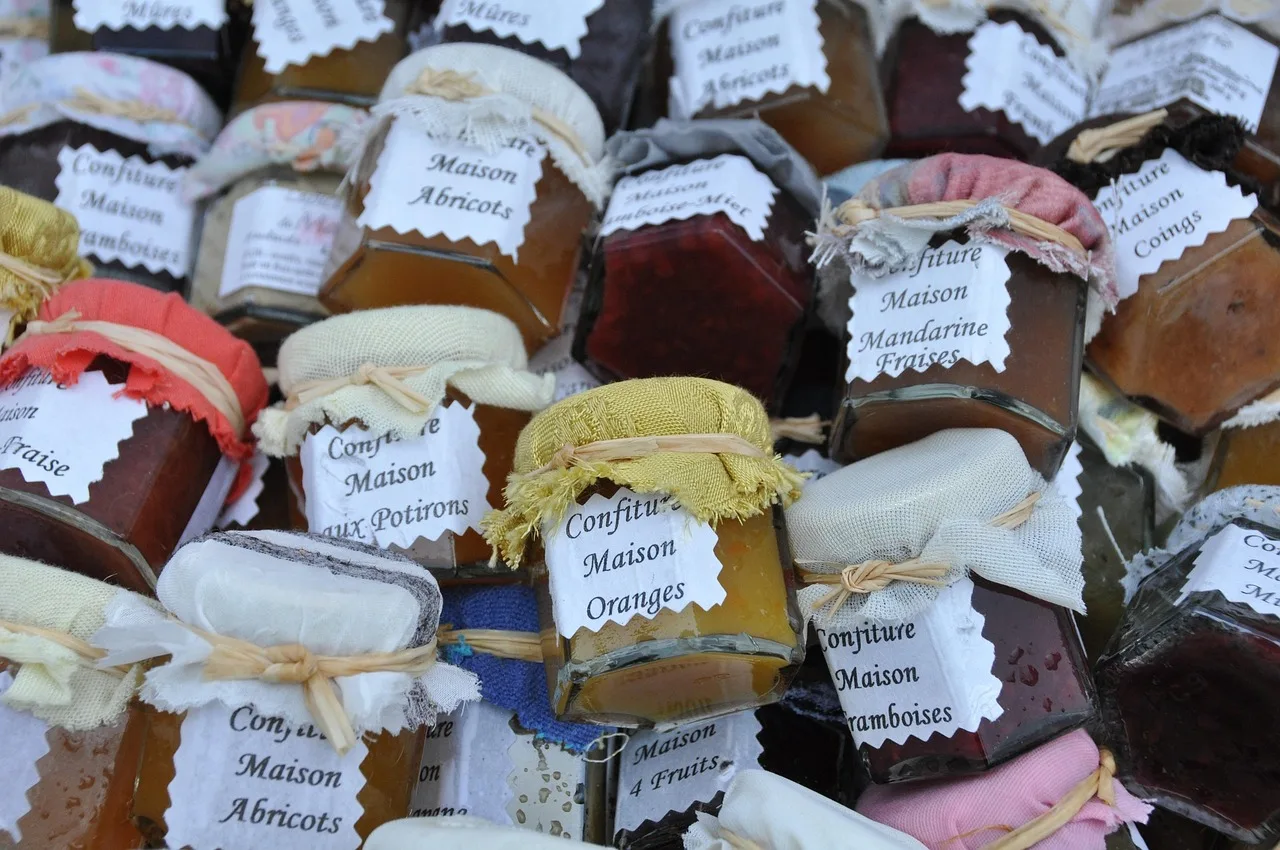
The smallest producers sit on a different footing. New York's Home Processor Registration, for the foods the state lets residents make in a home kitchen, currently carries no fee, so a home-kitchen jam and a licensed processor's jam on the same market table are not carrying the same compliance cost.
Where price stops predicting anything
Where price stops predicting
| Price move | What it usually buys |
|---|---|
| Cheap to mid | Better ingredients, smaller batch, real packaging |
| Mid to premium | Certification, single-origin sourcing, longer aging |
| Premium to luxury | Presentation, scarcity, and the story |
The first step is usually worth taking. The last one is a preference, and there is nothing wrong with paying for it as long as you know that is what you are doing. The middle step is where most disagreements happen, because certification and single-origin sourcing are invisible in the jar and only show up in the paperwork.
What each price step buys
Price move
- Cheap to mid
- Better ingredients
- Mid to premium
- Certification
- Premium to luxury
- Presentation
What it usually buys
- Cheap to mid
- Smaller batch
- Mid to premium
- Single-origin sourcing
- Premium to luxury
- Scarcity
One category breaks that ladder. With heritage varieties the extra money is agronomy rather than presentation: lower yield, more handling, and a crop somebody has had to relearn how to grow.
How to spend less without buying worse
Buy the larger size in a category you know you finish. Order several items from one producer in one shipment, not one item from several. Skip gift packaging for yourself.
Run the comparison first with the method in planning brand discovery. That sends money to a repeat purchase, not an experiment. Retail buyers use the same arithmetic, described in how shops and bars source.