Guides
Appalachian Apple Butter Small Batch: What Goes Wrong
Appalachian apple butter small batch jars fail months after you seal them. Learn what causes a loose set, a weak seal or a dull flavor, and how to prevent it.
What to take away
- The batch-ruining mistake is undercooking the butter before it goes into the jar. A loose set can look fine and spoil months later.
- Most quality faults come from one causefruit picked before it is ripe, or a spice added too early in the cook.
- Storage faults appear after weeks or months, not on the day you seal the jar.
- A jar labeled "small batch" is not proof of Appalachian origin. Check the address on the label.
- Fixing a bad batch costs the fruit, the fuel, and the afternoon. Prevention costs a thermometer and patience.
The batch-ruining one
Situation: You pull the pot off the heat when the butter looks thick on the spoon, then fill jars and process them.
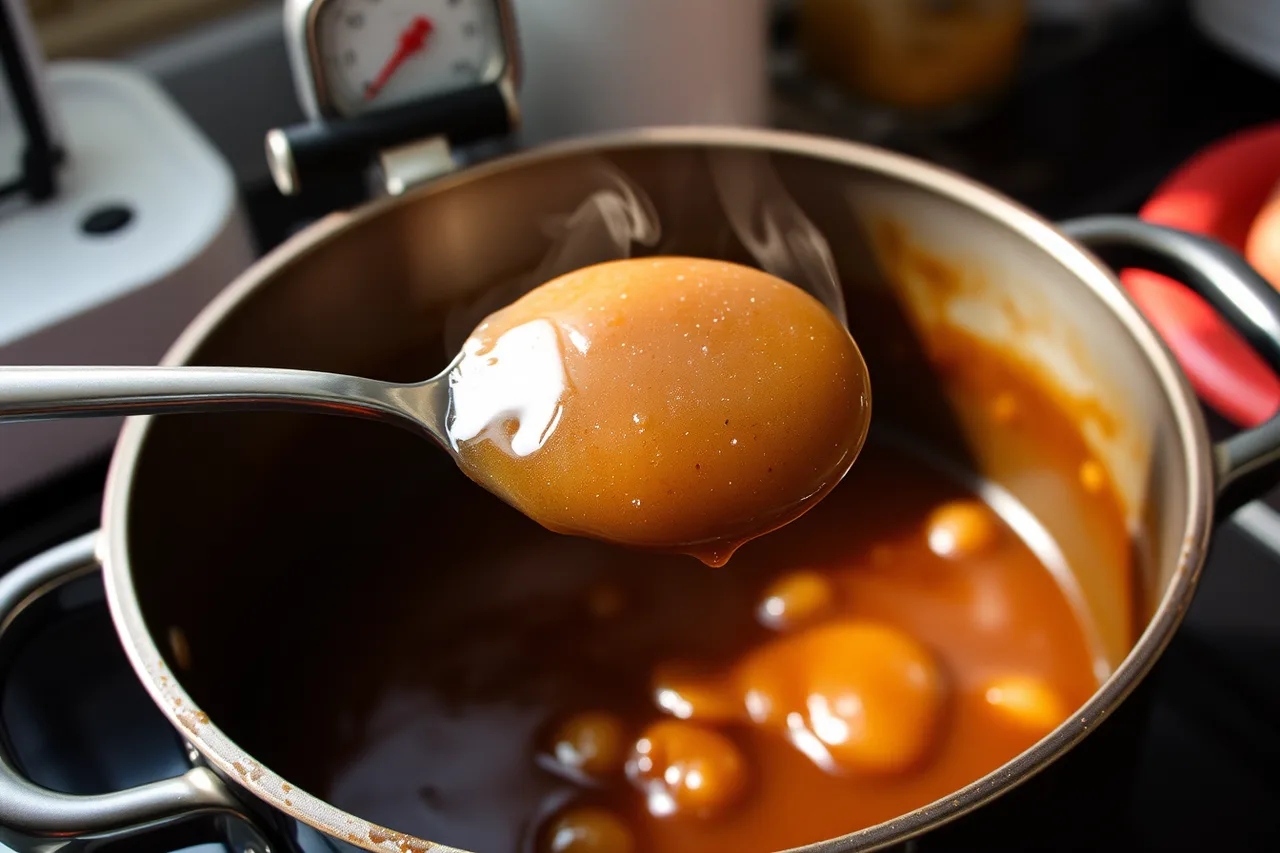
Consequence: The butter never reaches a set that holds. Water stays bound in the pulp, and the jar can grow mold or ferment after two to four months on the shelf. You will not see it at sealing time.
Prevention: Cook until a spoonful mounds and does not run, and check the temperature against a tested recipe. The National Center for Home Food Preservation publishes tested fruit butter recipes with processing times and altitude adjustments. Apple butter is a fruit butter, a category defined by its cooked-down fruit solids rather than by pectin set.
The ones that only affect quality
Situation: You buy whatever apples are cheap, often a bland dessert variety, and add cinnamon at the start of the cook.
Consequence: The butter tastes flat and one-note. Early spice turns bitter over a long simmer, and a low-acid fruit base masks it until the jar is open.
Prevention: Use a mix of tart and aromatic fruit. Golden Delicious and Grimes Golden, both first found in West Virginia, cook down well, and so do the older Winesap and York Imperial apples still grown in Virginia, West Virginia, and North Carolina orchards. The regional tradition behind the product is described in Wikipedia's entry on apple butter. Add spice in the last twenty minutes.
Situation: You stir only when the pot threatens to scorch.
Consequence: The bottom layer caramelizes hard and the whole batch carries a burnt edge.
Prevention: Stir on a schedule, every few minutes, and use a heavy pot. A wide pot speeds evaporation and shortens the window where scorching happens.
The ones that show up in storage
Situation: You seal jars while the butter is still hot but skip a water bath, or you reuse lids from last year.
Consequence: A weak seal lets air in. The failure appears after a season, when the lid has lost its vacuum and the surface has darkened. This is the mistake that stays hidden longest.
Prevention: Process filled jars in a boiling water bath for the time the USDA Complete Guide to Home Canning gives for your recipe and altitude, and use new lids each year. A jar that has lost its seal should be discarded, not tasted.
Situation: You store jars near a warm stove or in a sunny cabinet.
Consequence: Color darkens and flavor dulls within two to three months. The change is gradual, so you blame the recipe.
Prevention: Keep jars cool and dark. Once opened, refrigerate. The same cold-storage drift affects other pantry jars and is covered in pantry flavor loss and storage rules.
| Failure | When it shows | What it costs to fix |
|---|---|---|
| Loose set | 2 to 4 months | Full batch discarded |
| Burnt base | Same day | Batch downgraded or tossed |
| Failed seal | One season | Jar discarded |
| Flavor fade | 2 to 3 months | Quality only, still safe |
Where the origin claim breaks
A jar can say "small batch" and still be made hundreds of miles from the mountains. No federal rule defines the phrase, and "Appalachian" has no legal definition either. What the label must carry is the name and place of business of the manufacturer, packer, or distributor (21 CFR 101.5), so the address is the one claim you can check.
What carries weight is the manufacturer address, the state of production, and whether the brand sells through orchards and farm stands in the region. The Appalachian Regional Commission, the federal-state body that maps the region, draws its boundary far wider than most shoppers assume.
Festivals are a reasonable signal. The Berkeley Springs Apple Butter Festival in West Virginia, held each fall, draws makers who cook apple butter in copper kettles in public, and community boils across Virginia, West Virginia, and North Carolina follow the same pattern. State and county fair food preservation classes put those jars in front of judges; for how the competitions and exhibits work, see Wikipedia's description of state fairs.
Sizes, prices, and what a jar tells you
US jars run in a narrow set of sizes: half pint (8 oz), pint (16 oz), and quart (32 oz). Small-batch Appalachian jars commonly sell between roughly $8 and $16 for a pint, with festival and orchard pricing at the low end and gift packaging at the high end. Treat those figures as illustrative, not as a market survey.
Read the label for three things: net weight in ounces, the packer address, and an ingredient list short enough to read aloud. A long list of added pectin and preservatives usually signals volume production. Shops that stock heritage jars should run a provenance check first, as outlined in the retailer checklist for heritage products.
What they have in common
Every failure above is a timing error: fruit picked too early, spice added too soon, heat stopped too early, jars sealed too late. None of them announce themselves at the moment you make the call. You find out weeks or months later, when the jar is open and the batch is already spent.
A thermometer, a clock, and a written record of each batch will catch most of them. Home tasters who want to compare two jars side by side, rather than guess, can start with how to run a home triangle test.